
Lancaster Resident Lookup Coverage
A Lancaster resident lookup works best when you slow down. Match the right record to the right question. Courts, the county recorder, the assessor, and vital records offices each hold a different piece of the puzzle. Access depends on who is asking and what kind of file is involved. That matters here. A shared name can pull strangers into one search result. An address only proves who owns land, not who lives in a house. Anyone trying to find who lives on a street in Lancaster, or trace a past resident, gets further by pairing a name with one solid fact. Then test it against a second official record. The pages here lay out those paths clearly.
| Record | What it confirms | Where to search | Access and limit |
|---|---|---|---|
| Assessor parcel | Address, AIN, legal parcel, characteristics | LA County Assessor Portal or office | Free address search; not a household list |
| Recorded instrument | Named parties and recorded transaction | RR/CC Norwalk index | No public online index; search and copy fees |
| Voter status | Registration for a matching identity and address | LA County verification page | Four private inputs; no public browse |
| Court docket | Party, case, dates, status, and disposition | LA Superior Court | Split by case type; remote restrictions apply |
| Vital copy or index | Birth, death, marriage, dissolution, and relationships | RR/CC or California CDPH | Authorized and informational rules differ |
| Business filing | Entity, agent, officers, managers, and filed address | California SOS bizfile | Free search and PDFs; not guaranteed complete |
| Professional license | License type, number, status, and discipline links | California DCA search | Free; address can be a practice or mailing address |
| Probate file | Decedent, representative, heirs, or devisees | LA Superior Court | File access and sensitive details vary |
| Custody or registry result | Custody status or registry profile | LASD, CDCR, or Megan's Law | Does not prove Lancaster residence |
Match the source to the question you actually have. A license may list a practice location. A business filing may carry only a mailing address. A deed records a transaction that happened at one point in time. A docket describes a case, not a current home. Keeping these lines straight is what separates a careful resident lookup from turning an official record into an identity claim the paper never made.
Build a Lancaster Resident Anchor
Write the exact target name first. Include every variant you know: middle name, initial, suffix, birth surname, married name, or a documented alias. Then pick one anchor fact you can already support. This could be an address, an approximate year, a spouse, a relative, a business, a school, or a case. A Lancaster resident lookup should start at that intersection. Do not paste a bare name into every database at once.
Each portal wants different inputs. The Assessor Portal takes an address or a ten-digit AIN, with no public owner-name search. The recorder indexes by name and recording year, not by address or APN. The voter tool demands a last name, full birthdate, house number, and ZIP code. Court services split by case type. Learning these requirements before you open a portal saves a false conclusion. A blank result often just means the wrong tool was used. It does not mean the person or record is absent.
Treat dates as identity evidence. A mailing address on an old deed is not present residency. A court appearance in Lancaster does not prove a party lived there. A business address is not always a home. Record the source name, the access date, the record date, and the exact wording beside every result. A disciplined Lancaster resident lookup keeps those dates attached to the name. It avoids blending separate records into one story.
Verify a Lancaster Resident Step by Step
Verifying one person takes two independent intersections. A known middle name helps a lot. The same parcel legal description beats a surname plus Lancaster every time. A court case date paired with a business filing can narrow a common name too. Neither counts as proof, though, until the records clearly fit the same individual.
- Fix the identity starting point. Record the name variants and one known address, year, relationship, business, school, or case detail.
- Anchor the geography. If an address is known, search the Assessor Portal for the situs and AIN. If only a person is known, choose a court, business, license, or probate route that accepts the available input.
- Search the matching county or state index. Use LA Court by case type, DCA by license fields, SOS bizfile by entity name or file number, or the vital application that fits the requester.
- Compare a second source. Match dates, middle names, legal descriptions, case districts, agent roles, spouses, or a documented relationship. Reject a result that fits only a name.
- Order the right copy. An index may be enough for a lead. Request a certified copy from the custodian when an official record is required, and follow the access rule for that record.
Record definitions.
- Docket
- A court's running case record showing filings, hearings, orders, and other register entries.
- Index versus image
- An index points to a record. An image or physical file shows the document text, when that access is allowed.
- Certified copy
- A copy issued and certified by the custodian. It is different from a web result or an uncertified image.
- Disposition
- The recorded outcome or status of a case entry. It does not by itself establish a current address.
Lancaster Court Records by Type
Lancaster legal matters run through the Superior Court of California, County of Los Angeles. That includes the Michael D. Antonovich Antelope Valley Courthouse. California's court case lookup guidance places access control with the relevant superior court. It also cites California Rules of Court 2.500-2.507. There is no comprehensive statewide trial-court party index. Instead, LA Court splits its services into Civil, Criminal, Family Law, Probate, Small Claims, and Traffic routes. Each has its own entry point.
| Search field or route | Type | Use | Limit |
|---|---|---|---|
| Case Number | Text | Strongest lookup when known | Format varies by case type |
| Party Name | Text fields | Search last, business, and first names as offered | Variants and mode rules matter |
| Filing Date or Range | Date filter | Narrow a common name | Availability differs by service |
| Courthouse or District | Dropdown | Choose Antelope Valley or Lancaster when offered | Not present in every application |
| Case Type | Service tab | Route to civil, criminal, family, probate, small claims, or traffic | Required route, not one universal search |
An online result can yield a case number, caption, filing date, and case type. Status, parties, counsel, courthouse, register of actions, hearings, dispositions, judgments, and document descriptions may also appear. Remote images vary in coverage. A terminal at the courthouse may show material that never appears online. When requesting copies, give the clerk the case number, document title, and filing date if you have them. Phone clerks can explain access rules. But they will not build a family tree or decide which person a name belongs to.
Note: A docket entry records a case event, not a full biography of the Lancaster resident named in it.
The California Judicial Branch case-access page is the official starting point. It explains the court route from the beginning.
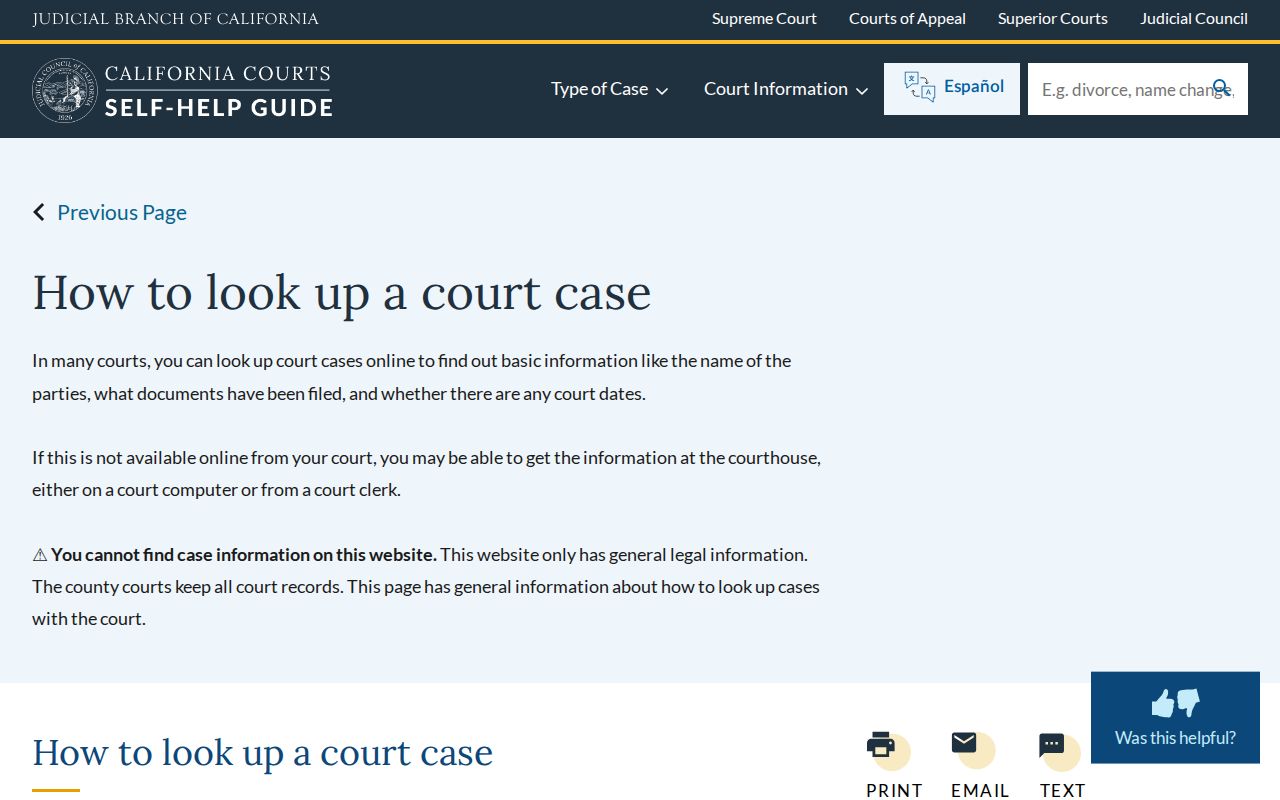
The court guidance image shows how Lancaster splits its records: some case material sits online, some stays on courthouse terminals, and some remains restricted.
Lancaster Resident Name Match
A common name needs a second intersection. Only then does a Lancaster resident lookup count as a real lead. Try spelling variants first. Then weigh the result against a known address, middle name, filing period, courthouse, counsel, business affiliation, or relative. A court caption can name a party without revealing a present home. A judgment settles a legal question without proving the person still lives in Lancaster. Those limits are not obstacles; they are the difference between a lead and a guess.
Sample LA Superior Court record inventory:
- Captioned plaintiff, petitioner, applicant, defendant, respondent, or decedent.
- Case number, court district, courthouse, and filing date.
- Case category, status, register-of-actions entries, and hearing dates.
- Judgment, disposition, or order description when public.
- Counsel and judicial officer names where shown.
- Document descriptions, with images or paid orders varying by case type.
- Restricted, sealed, juvenile, adoption, and confidential material that may not appear.
Federal matters sit on a separate track entirely. The PACER case locator searches federal cases by party or case number. This includes Central District of California matters. It runs under its own account and document-access rules. Older archived files may call for NARA or Federal Records Center retrieval. Remember that a federal docket is not a county residence file.
PACER's official case-access page shows the separate federal route. It covers a Lancaster name that reaches federal court.
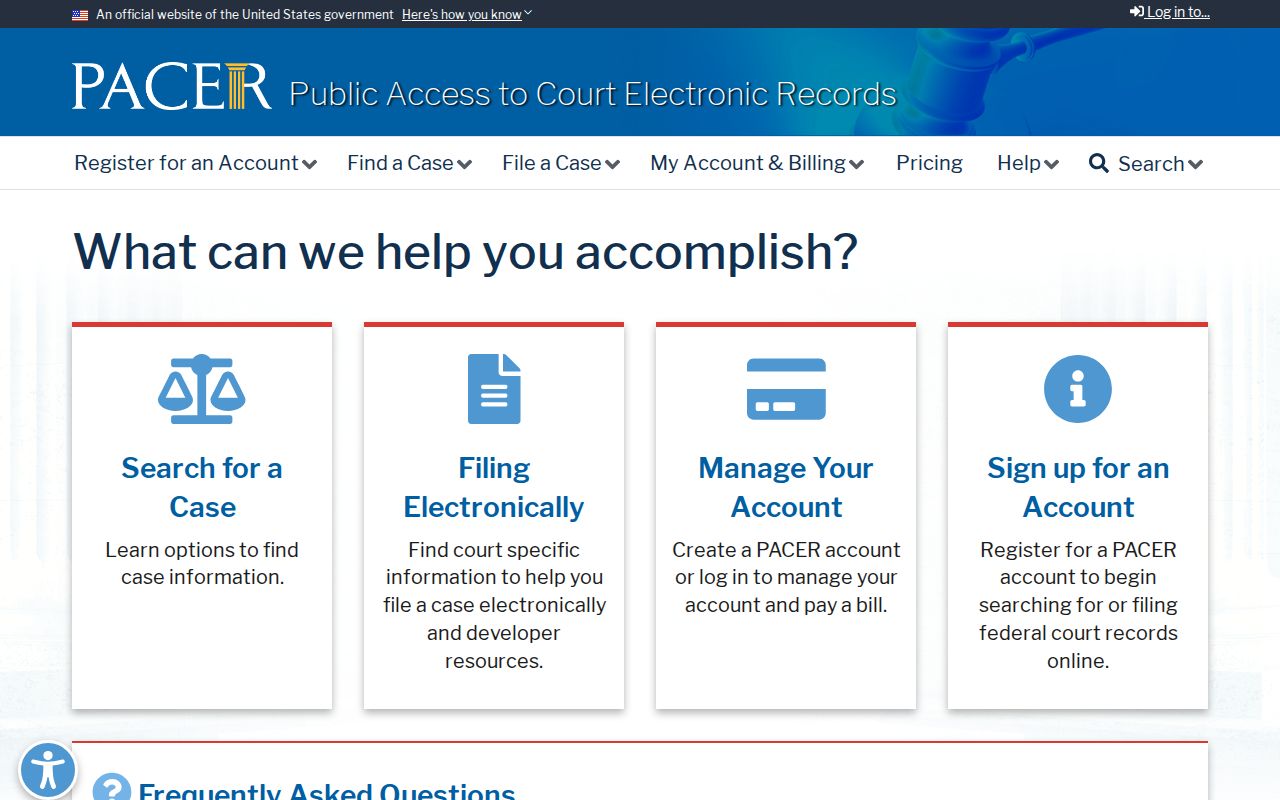
The PACER site marks the boundary between a federal docket search and the county or state record systems that anchor a resident lookup.
Lancaster Vital Records in Two Tiers
Births, deaths, and marriages in Lancaster flow through two parallel channels. The Los Angeles County Registrar-Recorder/County Clerk issues county copies. The state CDPH holds its own set. Health and Safety Code sections 103525-103526 split the product into two tiers. An authorized certified copy establishes identity. But only an eligible requester with the proper relationship or status can obtain one, backed by a sworn statement. An informational copy is also certified. It carries the mark "Informational, Not a Valid Document to Establish Identity." Some identifiers and signatures are redacted.
CDPH offers no electronic ordering portal of its own. You download an application and mail it, or use an approved third-party ordering channel that adds fees. The 2026 CDPH fee schedule lists $31 for a birth copy. It lists $26 for a death copy, $19 for a marriage copy, and $18 for a dissolution certificate. A no-record search can still retain its fee. Confidential marriage records are not open to ordinary public inspection. They usually demand a party, an authorized requester, or a court order.
County inspection rules run narrower than a name search. Birth material at Norwalk includes county indexes for births before 1905 and for 1964 to the present, by appointment. One application covers one identified record, and identification is required. Historical gaps yield to church registers, cemetery records, newspapers, probate, census schedules, and archives. Those substitutes are not certificates, though. The vital record itself remains the custodian's evidence.
Lancaster Voter Lookup Rules
The LA County voter verification page is a self-check, not a resident lookup. All four fields are required. It offers no public list of people at a street or ZIP. A match simply ties the submitted identity and address to registration status at that time. It never reveals ballot choices. It cannot prove that every household member lives at the address on file.
| Field | Required format | What it does |
|---|---|---|
| Last Name | Alphabetic text | Matches the registration surname |
| Birthdate | Full date, MM/DD/YYYY | Supplies the private identity match |
| House Number | Numbers only | Matches the residence number |
| Zip Code | Five digits | Completes the address match |
For assistance, call (800) 815-2666, option 2. The county's paid election products and Street Index require a contract. They also require a purpose declaration, a statutory-use agreement, and payment. Qualifying purposes are political, election, scholarly, journalistic, or governmental, not casual resident research. Norwalk Election Information handles those products by mail or in person. Voter address, phone, email, signature, and identification data all carry confidentiality limits. Safe at Home participants receive added protection.
Note: A voter match verifies only the supplied identity and address combination at that time, not present household occupancy.
Lancaster Business Records and Licenses
A business or professional filing can verify a public affiliation. It is never a residential record. California SOS bizfile searches an entity name or number. It covers corporations, LLCs, LPs, and nonprofit groupings. Advanced Search filters entity type, status, initial filing date, and begins-with options. Default results stop at the closest 500, while Advanced Search can exceed that limit. Free PDFs are available. Certificates and certified copies go through an account-based order process instead.
| Bizfile result field | Identity evidence | Reading caution |
|---|---|---|
| Entity name and number | Legal filing identity | New entities may use a 12-character ID beginning with B |
| Formation, status, and jurisdiction | When and where the entity was filed | Status is not a person's current location |
| Agent, street, and mailing address | Public contact trail | May be a business, service, or mailing address |
| Officers, directors, members, or managers | Named role as filed | Only what the filing reports is shown |
| Statement due date and filing history | Record chronology | Not a complete life or residence history |
The SOS business-search page is the source for the entity-name and file-number route.
Bizfile can connect a name to a filed role or business address. Check any hit against the record date and entity history before drawing conclusions.
The California Department of Consumer Affairs license search accepts board, license type, name, number, city, and county fields. Status and discipline links appear where available. Board-specific portals add contractor, attorney, medical, nursing, or other license detail. A practice address is not automatically a home. County fictitious-business-name records and Lancaster business records supply local context, while city filings remain custodian-specific. Bizfile's separate UCC search takes a debtor name or file number. It returns a lien-notice abstract, not a certified full record. DCA's statewide search offers another official intersection for a professional name.
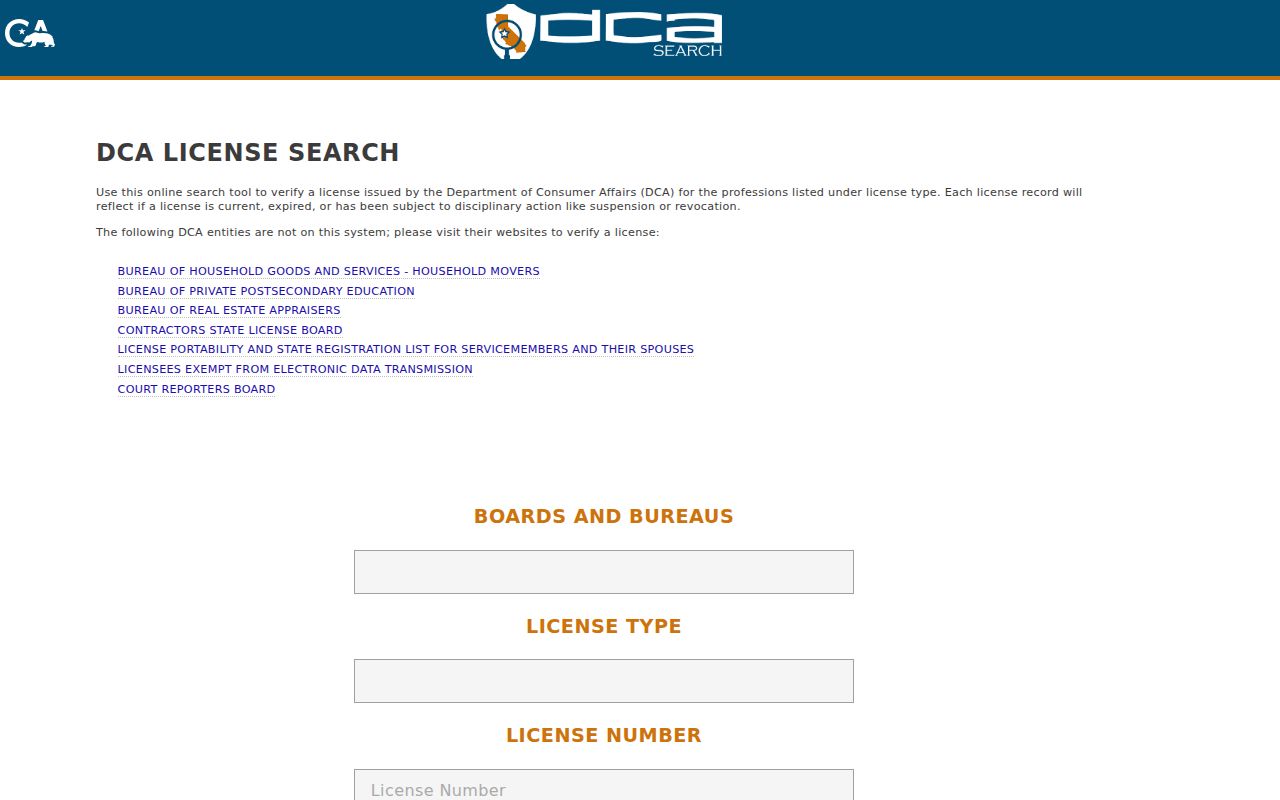
The DCA image shows why a license number or a board can separate people who share a similar name.
Note: A filed business or license address may identify a public contact point, not a private home or present Lancaster residence.
Official Lancaster Resident Routes
Different personal goals call for different custodians. An heir should begin with an LA Superior Court probate case, a successor deed, an obituary, and published notice, then request the court or vital copy the access rule allows. A birth parent should use California adoption-information, consent, and court processes rather than trying to defeat confidential adoption records through a routine birth search.
A former classmate is easier to trace through Antelope Valley College yearbooks and archives, Lancaster Library reference material, and the Antelope Valley Press, all of which supply historical names and school context. Verify public access and year coverage directly with each custodian. A business principal compares SOS bizfile against a county fictitious-business-name filing or a city license. Each route finds a documented relationship or historical connection. None of them creates a current household directory.
For a deceased former resident, a death index or informational copy establishes the event, while an obituary, cemetery register, and probate file connect the relatives. Treat the obituary as a lead. The certified record or court file is the custodian's evidence once the requester qualifies.
Lancaster Federal and Custody Records
Custody lookups are not a residents directory. The LA County Sheriff Inmate Information Center takes a name or booking number. It also asks for identity details. Results may include booking, facility, court, bail, or release fields. A LASD hit proves a county custody record only. It does not establish Lancaster residence. The CDCR locator works from a CDCR number or a first and last name. California Megan's Law offers name, map, address, and radius modes with statutory warnings. Each tool has its own result limits. The LASD inmate information page shows how narrow and agency-specific these results stay.
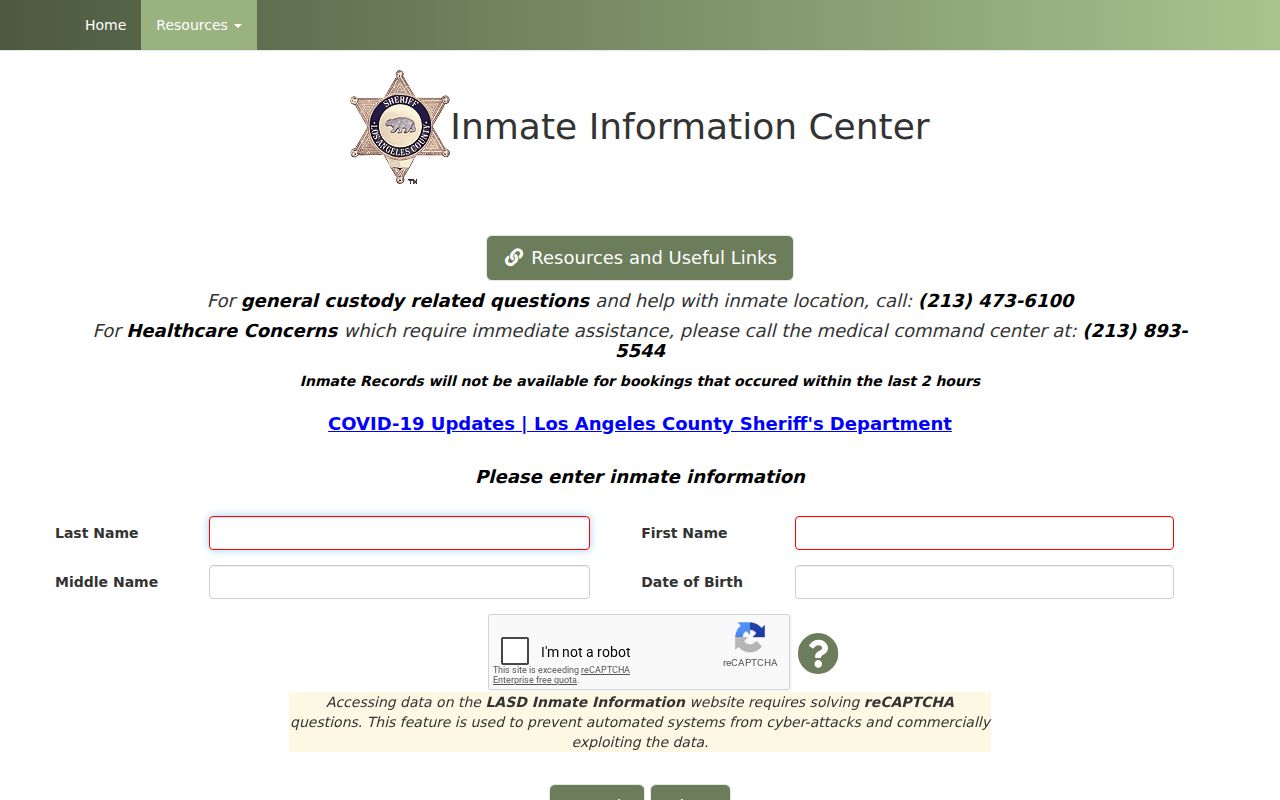
A custody result is a status record with a date. Treat it as nothing more. It is not proof of a home address or a family tie.
Incident reports, 911 material, body-worn evidence, victim details, juvenile records, medical information, witnesses, and active investigations all sit behind separate law-enforcement access rules. California offers no public, universal name-based criminal-history search. When a court or agency record is what you need, ask the responsible clerk or records unit about the exact case, report, or request channel.
Privacy Limits on a Lancaster Resident Lookup
California's Safe at Home program gives qualifying survivors and protected workers a substitute mailing address. Real confidentiality stands behind it. Government Code section 6208.1 bars publishing a participant's home address, phone, or image in the described circumstances. Do not try to defeat that protection. That means no stitching together maps, voter products, business filings, or historical clues. Voter identifiers and signatures stay under release limits too.
The state's consumer privacy rules and the 2026 DROP platform apply to covered businesses. They also apply to registered data brokers. They cannot force deletion of a deed, court docket, assessment record, or anything else a custodian must keep. Wrong result? Go to the source: the Assessor for parcel data. Go to RR/CC for voter or recorder material, the court clerk for a case file, CDPH for a vital record, or SOS for a business filing.
Lawful personal use. A Lancaster resident lookup can support family history, estate research, reconnecting, and civic questions. Public does not mean permission to stalk, harass, intimidate, or publish protected personal information.